
Your Capacity Plan Is Broken - And It's Costing You Millions
Here's a question worth sitting with:
When was the last time you made a headcount decision based on real data about how your team spends their time?
Not how many accounts they manage. Not calendar density. Not how loudly someone said they were drowning in a team meeting.
Most leaders can't answer this question - not because they're not paying attention, but because the data has never existed. The tools we've relied on - CRMs, ticketing systems, call recording software - were built to capture customer data, not team effort data.
So we build capacity plans on proxies. And we make million-dollar decisions on incomplete information.
The Visibility Gap
Your CRM captures roughly 35% of where your team's time actually goes. The other 65% - Slack threads, internal meetings, non-tracked customer interactions, document prep, in-app, cross-functional coordination, admin work - is invisible.
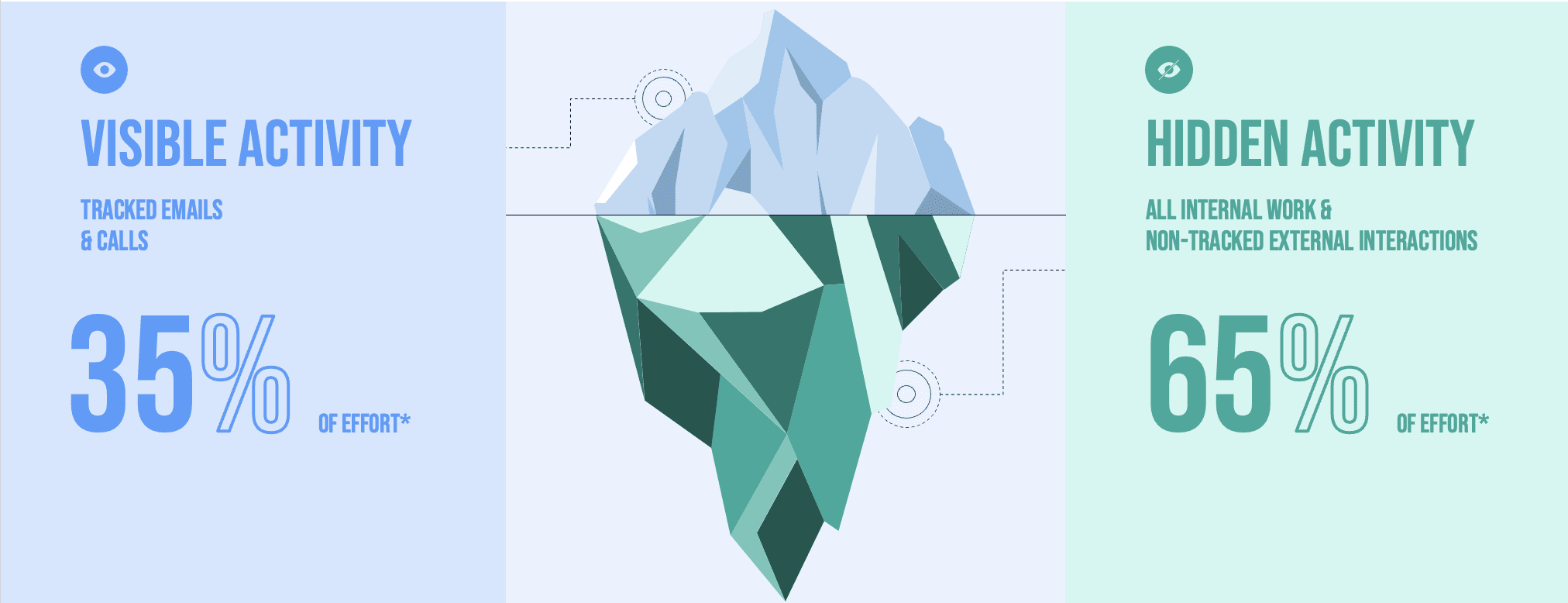 35% of your team's time is invisible
This isn't a rounding error. It's the majority of actual effort. And every headcount decision, coverage model, and coaching conversation you run is built on that 35%.
How Traditional Capacity Planning Goes Wrong
The Account Ratio Model
The most common starting point: set a target for accounts or ARR per CSM, and use that as the capacity proxy.
The problem is that two CSMs with identical books of business can have dramatically different actual workloads.
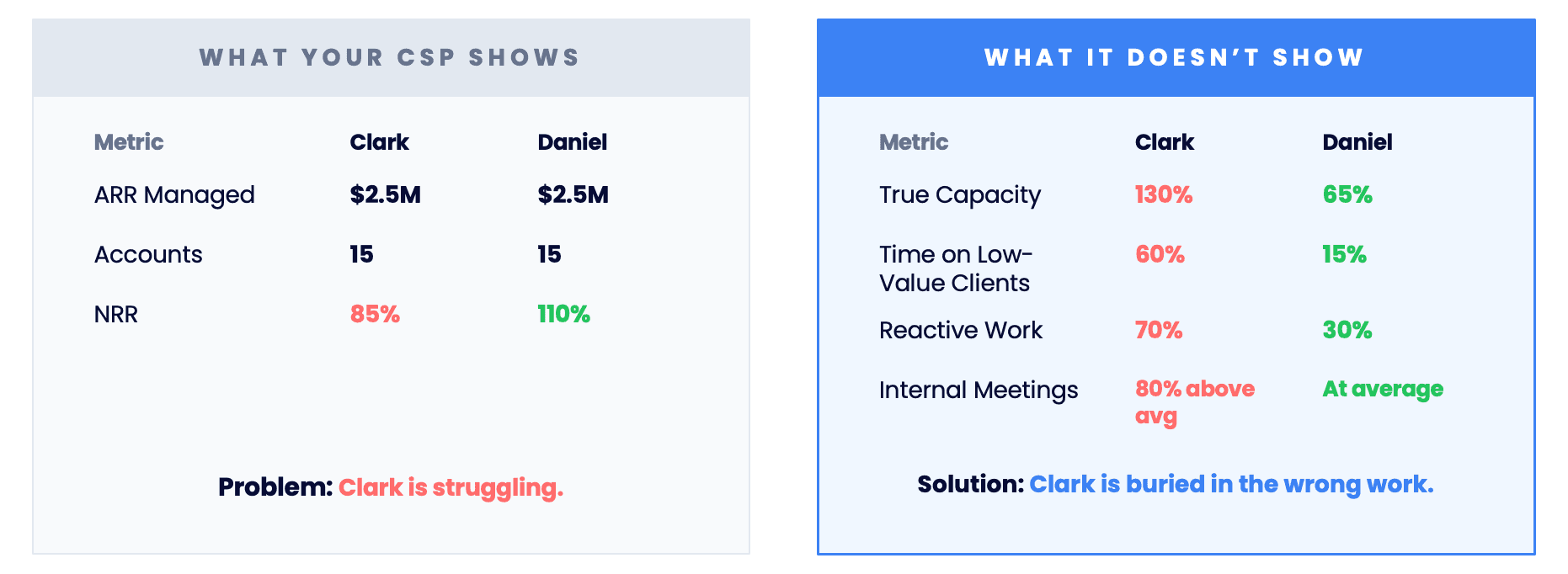 Same book of business. Completely different capacity and performance.
Same accounts. Same ARR. Same team. Clark is burning out. Daniel has capacity to spare. Your account ratio model says they're identical - and every assignment and hiring decision you make based on that model is wrong.
The Survey & Self-Reporting Model
When leaders recognize account ratios aren't enough, the next instinct is to ask people where their time goes. Time studies, weekly check-ins, activity logging.
This approach has a few compounding problems:
People are bad at remembering where their time went
Self-reported data skews toward activities managers value (customer calls) and away from ones they don't (admin)
For a team of 40 CSMs spending 30 minutes a week on logging, you're burning 1,000+ hours a year to collect data that's still inaccurate
Your best performers - the ones whose time data you most want - hate it most
The Manager Gut Feel Model
In practice, most capacity decisions come down to the manager's read of the situation, informed by brief 1:1s and whatever activity data is easily accessible.
This creates the most common executive conflict in CS leadership: the CEO looks at calendar density and wonders if the team is productive. The CS leader insists they're drowning. Both are working from different incomplete slices of reality, and the debate goes nowhere.
What Getting It Wrong Actually Costs
Unnecessary hires. When you can't measure true capacity, you hire based on complaints. For most post-sales orgs, there's 10-20% latent capacity that never surfaces because no one can see it. On a 40-person team at $100K fully-loaded cost, 10% hidden capacity = 4 avoided hires = $400K in annual waste.
Invisible burnout. The cruelest dynamic: while you miss excess capacity in some team members, you also miss when others are quietly operating at 130%+ load, week after week. These are often your best performers - the ones who don't complain. By the time they resign, replacement costs run 1.5-2x their salary.
Misaligned effort. Without data, reactive urgency beats proactive strategy. Low-ARR accounts that file tickets get attention. High-value strategic accounts that are quiet get neglected.
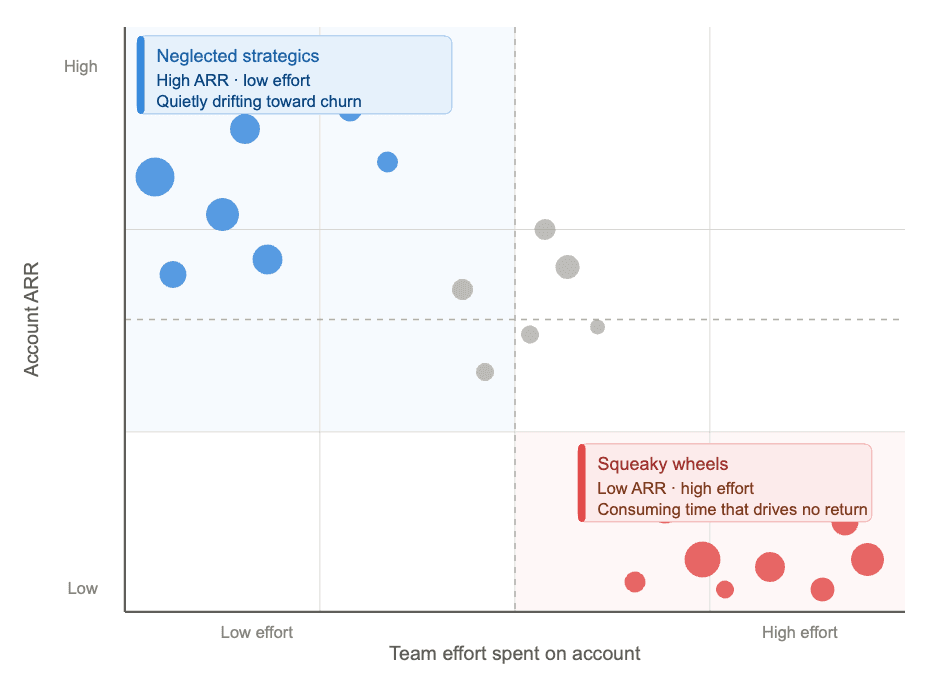 Squeaky Wheel Gets the Grease
Coaching without information. You might know Clark's NRR is low. But without knowing he spends 60% of his time on low-value accounts and operates at a 3:1 reactive-to-proactive ratio, you can't coach him effectively. You can only repeat vague advice that won't change anything.
The Better Approach
The problem isn't how leaders are managing capacity. It's that the underlying data hasn't existed.
Lumopath automatically captures where your team's time goes - across email, calendar, Slack, CRM, ticketing, and every other tool they use - without anyone changing how they work. No logging. No surveys. No behavior change.
What you get:
True capacity scores for every team member, updated continuously
Time allocation breakdowns: customer-facing vs. internal, proactive vs. reactive, by account and activity type
Side-by-side comparisons of team members with the same book of business
AI-powered answers to specific questions: "Where is Clark's time going?" or "Which accounts are being neglected?"
12 months of historical data available on day one
The result is that the questions that used to generate executive debates - Is my team at capacity? Do we need to hire? Why is this rep underperforming? - become answerable with data instead of opinion.
"Staffing conversations went from 'trust me, we're swamped' to real data that leadership and my team both trust." - Ben Terrill, Head of Customer Success, Seso
Written by: Mikey Renan
Cofounder @ Lumopath