
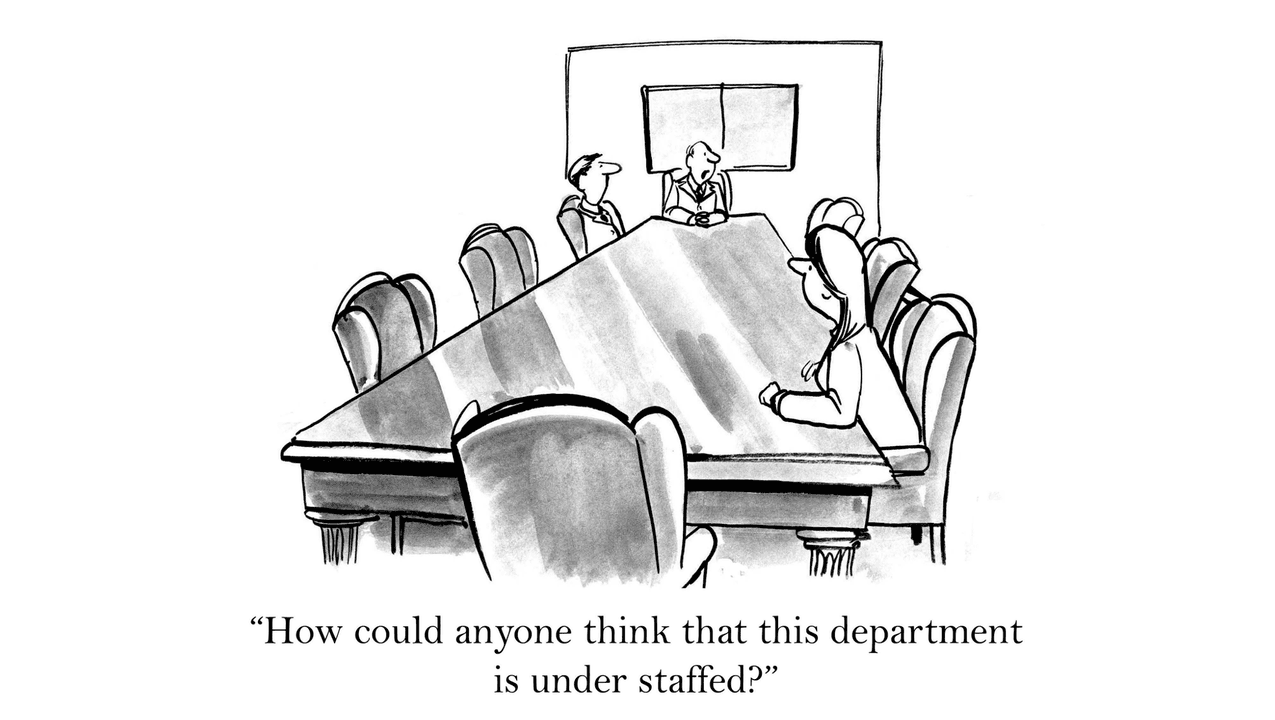
Teams are either under or over-staffed, and most leaders don't know which bucket they fall into
Client management today is distributed across so many teams and tools it can make your head spin.
A single client can interact with Executive Leadership, Sales, Implementation, Customer Success, Product, Engineering and Support.
And the work to support that client is completed using an ever-expanding tech stack - Google Cal, Gmail, Drive, Jira, Zendesk, Intercom, Salesforce, and Gainsight could all be used to support a single customer.
It's no wonder that most ops leaders have an incomplete and imprecise view of the true cost to serve their customers. As a result, operating models and headcount planning are based off top-down assumptions and/or highly manual exercises where team leads are asked to approximate how much time goes into every activity required to do the job.
The net result is that teams are either under or over-staffed, and most leaders don't know which bucket they fall into.
In most companies, the team leads and ICs believe it's the former, and the c-suite feels it's the latter.
"Do more with less"
The most common phrase I’ve heard in conversations with 500+ SaaS leaders is we need to “do more with less.”
Teams are reducing headcount, cutting software costs, implementing AI to automate processes, implementing tech-touch, and doing whatever else they can to preserve cash or achieve - [gasp] - profitability!
These can all be highly impactful and necessary actions, but the problem is that in many cases companies are throwing darts at the wall vs using hard data to make these decisions.
How can you build the right hiring roadmap without truly understanding the cost to serve your clients?
How can you determine what automation will have the highest impact without an accurate understanding of the time going into each workflow.
And how do you know if you're actually moving in the right direction with these efforts? If you reduce headcount but your team needs to work 14-hour days to carry the slack, you may save money in the short term but you're going to be backfilling your top team members before you know it.
"An objective understanding of what it takes to run the business"
What teams need is an objective understanding of what it takes to run the business:
How many hours go into all the emails, meetings, slack conversations, documents, tickets, engineering tasks etc.?
How much team effort goes into each stage of the client lifecycle?
How much work goes into non-client, administrative activity?
How does this differ by team?
And how does this differ by client segment: Enterprise, Mid-market, SMB, etc.?
With a clear understanding of the above, you can build the most efficient hiring plan, determine what software will have the highest leverage, and do so with complete alignment across the team.
Lumopath
We built Lumopath to help companies understand their cost-to-serve so they can scale and optimize operations effectively. Our goal was to make it as easy as possible so that a team of 5 or a team of 5,000 could get started in 30 minutes. How does it work?
1. Connect Lumopath to your CRM in one-click
2. Connect Lumopath to the APIs of the business tools that matters to your org. We have over 100 available integrations. Each can be connected in minutes - with no code necessary
3. And that's it! Our platform will do the rest.
Our data engine utilizes AI to tie all work activity to either a client, a prospect, or non-client activity. Within minutes you will have a clear idea of exactly how much it takes to support each client and segments, and all the questions outlined above.
If you're interested in learning more and up-leveling your strategic planning, please reach out. We're always here to help.
Written by: Mikey Renan
Cofounder @ Lumopath